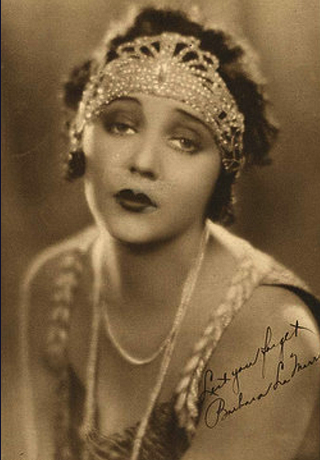
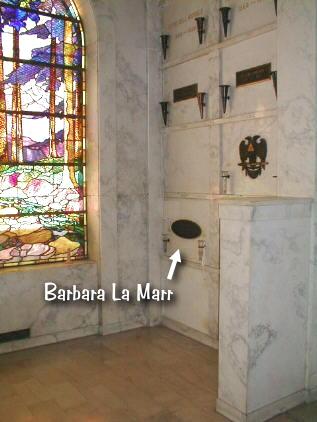
Actress. She was best known for playing the character roles of queens, married women, and women of distinction, usually in romantic, comedy, drama, and mystery films. She was a silent film star whose short life burned brightly with talent, scandal, and tragedy. The press famously labeled her "The Girl Who Is Too Beautiful," a nickname stemming from a real-life juvenile court incident where a Los Angeles, California, judge found the teen too stunning to be unchaperoned in the city. She was born one of two children as Reatha Dale Watson to William Wright Watson Sr. (1857-1941, He was a successful newspaperman), and his wife Rosana May Conter "Rose" Watson (1858-1936), in Yakima, Washington, on July 28, 1896. Her siblings included a brother named, William Wallace Watson Jr. (1884-1952, He later became a vaudevillian entertainer under the stage name of Billy Wright DeVore). She also had two half-siblings, Henry Clay Barber (1876-1966), and Violet June Barber (1880-1954, Last name later Marston), from her mother's previous marriage. This flair for the dramatic followed her from her childhood and she appeared in vaudeville and worked in stock companies. She made her stage debut as 'Little Eva' in a Tacoma, Washington, "Uncle Tom's Cabin," production in 1904 to the height of Hollywood fame. Besides, "Uncle Tom's Cabin" (1904), she also performed in other stage plays, including "East Lynne," "Zaza," and The "Man from Texas." She also later toured in a three-person vaudeville comedy act with Nicholas Bernard "Ben" Deeley (1878-1924), in 1917, whom she would later marry. Before finding fame in films, she was a talented screenwriter who sold several film scenarios to studios like Fox Film Corporation under the alias "Folly Lytell." Her work as a screenwriter included the films, "The "Mother of His Children" (1920), "The Rose of Nome" (1920), "The Little Grey Mouse" (1920), "Flame of Youth" (1920), "The Land of Jazz" (1920), "My Husband's Wives" (1924), "The White Moth" (1924), and "The Shooting of Dan McGrew" (1924). It was during this time that she eventually went back to Los Angeles, California, where, at the urging of stars like Douglas Fairbanks (1883-1939), and Mary Pickford (1892-1979), she stepped in front of the camera. She made her actual film debut playing the role of 'Tam O'Shanter Girl' in the classic film drama, "Harriet and the Piper" (1920), which also starred Anita Stewart (1895-1961), Ward Crane (1890-1929), and Charles Richman (1865-1940). Her striking looks and natural talent quickly made her a major star, known for playing captivating "vamp" characters. She embraced a hedonistic lifestyle, once boasting to the press that she "slept no more than two hours a night" because she had better things to do. Besides, "Harriet and the Piper" (1920), her many other film credits include, "Flame of Youth" (1920), "The Nut" (1921), "Desperate Trails" (1921), "The Three Musketeers" (1921), "Cinderella of the Hills" (1921), "Arabian Love" (1922), "Domestic Relations" (1922), "The Prisoner of Zenda" (1922), "Trifling Women" (1922), "Quincy Adams Sawyer" (1922), "The Hero" (1923), "Poor Men's Wives" (1923), "Souls for Sale (1923), "Mary of the Movies" (1923), "The Brass Bottle" (1923), "St. Elmo" (1923), "Strangers of the Night" (1923), "The Eternal Struggle" (1923), "Thy Name Is Woman" (1924), "The Shooting of Dan McGrew" (1924), "The White Moth" (1924), Sandra (1924), "The Heart of a Siren" (1925), and "The White Monkey" (1925). This relentless schedule of work and partying, along with severe crash dieting to stay thin for the camera, took a heavy toll on her health. In 1923, an ankle injury sustained during the filming of "Souls for Sale" (1923), led to an addiction to prescribed painkillers, which escalated to opiate use. Her health plummeted, although she continued to work, leading to a diagnosis of tuberculosis and kidney failure. She collapsed on the set of her final film, "The Girl from Montmartre" (1926), and died a few months later at her parents' home from complications of pulmonary tuberculosis and nephritis in Altadena, California, on January 30, 1926, at the age of 29. Following her death, an estimated 40,000 fans filed past her open casket at the Hollywood Memorial Park, now Hollywood Forever Cemetery in Hollywood, California, where she was buried in the Cathedral Mausoleum. Her legacy endures, an icon of the roaring twenties whose intense life mirrored her dramatic onscreen persona. Her contributions to film are recognized with a star on the Hollywood Walk of Fame at 1621 Vine Street in Hollywood, California. In her personal life, she was married five times including to, Lawrence Floyd Converse (1889-1914, married in 1914; died shortly after by suicide), Philip Bryan "Phil" Ainsworth (1896-1962, married 1916; divorced 1918), Nicholas Bernard "Ben" Deeley (1878-1924, married in 1918; divorced 1923), and Virgil Ashley "Jack" Dougherty (1895-1938, married in 1923; married until her death in 1926). She had one child, a son named Marvin Carville La Marr (July 29, 1922-October 11, 2014), whose birth was kept secret and who was legally "adopted" by the actress. After her death, her son was adopted by her dearest friend, the actress ZaSu Pitts (1894-1963), and was renamed Donald Michael Gallery.
Actress. She was best known for playing the character roles of queens, married women, and women of distinction, usually in romantic, comedy, drama, and mystery films. She was a silent film star whose short life burned brightly with talent, scandal, and tragedy. The press famously labeled her "The Girl Who Is Too Beautiful," a nickname stemming from a real-life juvenile court incident where a Los Angeles, California, judge found the teen too stunning to be unchaperoned in the city. She was born one of two children as Reatha Dale Watson to William Wright Watson Sr. (1857-1941, He was a successful newspaperman), and his wife Rosana May Conter "Rose" Watson (1858-1936), in Yakima, Washington, on July 28, 1896. Her siblings included a brother named, William Wallace Watson Jr. (1884-1952, He later became a vaudevillian entertainer under the stage name of Billy Wright DeVore). She also had two half-siblings, Henry Clay Barber (1876-1966), and Violet June Barber (1880-1954, Last name later Marston), from her mother's previous marriage. This flair for the dramatic followed her from her childhood and she appeared in vaudeville and worked in stock companies. She made her stage debut as 'Little Eva' in a Tacoma, Washington, "Uncle Tom's Cabin," production in 1904 to the height of Hollywood fame. Besides, "Uncle Tom's Cabin" (1904), she also performed in other stage plays, including "East Lynne," "Zaza," and The "Man from Texas." She also later toured in a three-person vaudeville comedy act with Nicholas Bernard "Ben" Deeley (1878-1924), in 1917, whom she would later marry. Before finding fame in films, she was a talented screenwriter who sold several film scenarios to studios like Fox Film Corporation under the alias "Folly Lytell." Her work as a screenwriter included the films, "The "Mother of His Children" (1920), "The Rose of Nome" (1920), "The Little Grey Mouse" (1920), "Flame of Youth" (1920), "The Land of Jazz" (1920), "My Husband's Wives" (1924), "The White Moth" (1924), and "The Shooting of Dan McGrew" (1924). It was during this time that she eventually went back to Los Angeles, California, where, at the urging of stars like Douglas Fairbanks (1883-1939), and Mary Pickford (1892-1979), she stepped in front of the camera. She made her actual film debut playing the role of 'Tam O'Shanter Girl' in the classic film drama, "Harriet and the Piper" (1920), which also starred Anita Stewart (1895-1961), Ward Crane (1890-1929), and Charles Richman (1865-1940). Her striking looks and natural talent quickly made her a major star, known for playing captivating "vamp" characters. She embraced a hedonistic lifestyle, once boasting to the press that she "slept no more than two hours a night" because she had better things to do. Besides, "Harriet and the Piper" (1920), her many other film credits include, "Flame of Youth" (1920), "The Nut" (1921), "Desperate Trails" (1921), "The Three Musketeers" (1921), "Cinderella of the Hills" (1921), "Arabian Love" (1922), "Domestic Relations" (1922), "The Prisoner of Zenda" (1922), "Trifling Women" (1922), "Quincy Adams Sawyer" (1922), "The Hero" (1923), "Poor Men's Wives" (1923), "Souls for Sale (1923), "Mary of the Movies" (1923), "The Brass Bottle" (1923), "St. Elmo" (1923), "Strangers of the Night" (1923), "The Eternal Struggle" (1923), "Thy Name Is Woman" (1924), "The Shooting of Dan McGrew" (1924), "The White Moth" (1924), Sandra (1924), "The Heart of a Siren" (1925), and "The White Monkey" (1925). This relentless schedule of work and partying, along with severe crash dieting to stay thin for the camera, took a heavy toll on her health. In 1923, an ankle injury sustained during the filming of "Souls for Sale" (1923), led to an addiction to prescribed painkillers, which escalated to opiate use. Her health plummeted, although she continued to work, leading to a diagnosis of tuberculosis and kidney failure. She collapsed on the set of her final film, "The Girl from Montmartre" (1926), and died a few months later at her parents' home from complications of pulmonary tuberculosis and nephritis in Altadena, California, on January 30, 1926, at the age of 29. Following her death, an estimated 40,000 fans filed past her open casket at the Hollywood Memorial Park, now Hollywood Forever Cemetery in Hollywood, California, where she was buried in the Cathedral Mausoleum. Her legacy endures, an icon of the roaring twenties whose intense life mirrored her dramatic onscreen persona. Her contributions to film are recognized with a star on the Hollywood Walk of Fame at 1621 Vine Street in Hollywood, California. In her personal life, she was married five times including to, Lawrence Floyd Converse (1889-1914, married in 1914; died shortly after by suicide), Philip Bryan "Phil" Ainsworth (1896-1962, married 1916; divorced 1918), Nicholas Bernard "Ben" Deeley (1878-1924, married in 1918; divorced 1923), and Virgil Ashley "Jack" Dougherty (1895-1938, married in 1923; married until her death in 1926). She had one child, a son named Marvin Carville La Marr (July 29, 1922-October 11, 2014), whose birth was kept secret and who was legally "adopted" by the actress. After her death, her son was adopted by her dearest friend, the actress ZaSu Pitts (1894-1963), and was renamed Donald Michael Gallery.
Bio by: The Silent Forgotten
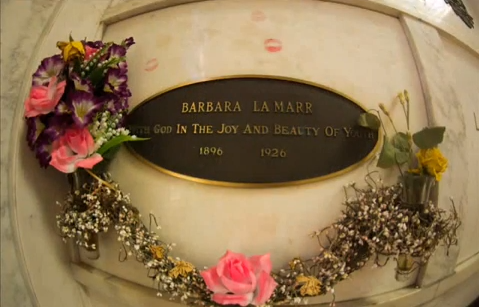
Inscription
With God In The Joy And Beauty Of Youth