

History Guild publishes articles that provide interesting insights into history. We cover all aspects of history, from around the world and across time.

‘Madam War Criminal’, unrepentant at 95
Reading time: 12 minutes
How could a university professor and internationally established scientist become a war criminal? This question prompted me to spend hundreds of hours interviewing Biljana Plavšić, now 95, at her home in Belgrade, the Serbian capital. Plavšić, a former biologist, senior Bosnian Serb political leader and president of the Bosnian Serb Republic, is the only woman of 161 people to have been indicted by the International Criminal Tribunal for the Former Yugoslavia (ICTY). She is the first female high-ranked politician to be prosecuted for mass atrocities.

A 2,000‑year‑old building site reveals the raw ingredients for ancient Roman self‑healing concrete
Reading time: 5 minutes
Roman concrete is pretty amazing stuff. It’s among the main reasons we know so much about Roman architecture today. So many structures built by the Romans still survive, in some form, thanks to their ingenious concrete and construction techniques. However, there’s a lot we still don’t understand about exactly how the Romans made such strong concrete or built all those impressive buildings, houses, public baths, bridges and roads.

We built a database of 290,000 English medieval soldiers – here’s what it reveals
Reading time: 5 minutes
When you picture medieval warfare, you might think of epic battles and famous monarchs. But what about the everyday soldiers who actually filled the ranks? Until recently, their stories were scattered across handwritten manuscripts in Latin or French and difficult to decipher. Now, our online database makes it possible for anyone to discover who they were and how they lived, fought and travelled. To shed light on the foundations of our armed services – one of England’s oldest professions – we launched the Medieval Soldier Database in 2009. Today, it’s the largest searchable online database of medieval nominal data in the world. It contains military service records giving names of soldiers paid by the English Crown. It covers the period from 1369 to 1453 and many different war zones.

Amelia Earhart disappeared almost 90 years ago. Why are so many people still looking for her?
Estimated reading time: 6 minutes
It has been more than 88 years since the world’s most famous female aviator, Amelia Earhart, and her navigator Fred Noonan, disappeared on the second-last leg of their around-the-world flight odyssey. According to the United States government’s official report of the 16-day search, Earhart and Noonan ran out of fuel and crashed into the Pacific Ocean, short of their objective of Howland Island, on July 2 1937.

No small beer: how the famous drink affects law (and law affects beer)
Reading time: 5 minutes
Law affects beer, and beer affects law. The connection between the two is stronger than you might think, as we have illustrated in the recently published book Beer Law. So as you pour a nice cold one during the summer holidays, here are a few things to think about.

It was lonely during WWII. Those at home and away coped through letters
Reading time: 4 minutes
Letter writers on the home and battle fronts showed a great capacity to express vulnerability by describing their loneliness. Through their heartache and anxiety about the uncertainty of their futures, separated spouses realised their love for one another was undeniable.
The Butterfly King: The Mysterious Death of King Boris III
Reading time: 8 minutes
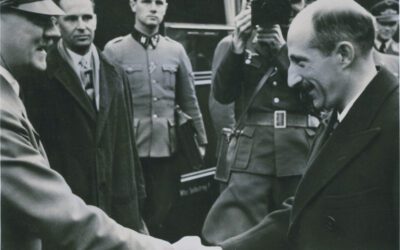
King Boris III of Bulgaria came to power in 1918 following the abdication of his father and nearing the end of WW1. History would remember him for two things: his love of butterflies, and dying.
Journalist and author Becky Milligan brilliantly investigated and popularised the mystery of Boris III’s death shortly following his meeting with Hitler in 1943. Yet before then, the now notorious Butterfly King had led the nation of Bulgaria through nearly two and a half decades of inner turmoil and dramatic geopolitical upheaval.
To truly understand the events surrounding his death, we must dive headfirst into Boris’ tumultuous time at the top of Bulgarian society, his shaky alliance with the Axis powers, and finally his infamous final meeting with Hitler.
Militant Paleontologists: The Wild West’s Bone Wars
Reading time: 9 minutes
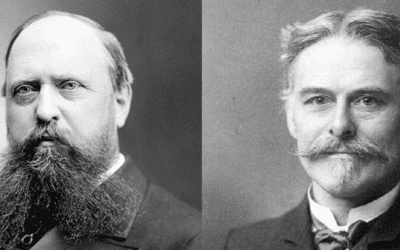
In the late 1860s, paleontologist Edward Drinker Cope was afforded a great opportunity: to be the first to describe a freshly-unearthed ancient species. The specimen, which had stalked the bygone seas of Kansas, was an aquatic reptile called a plesiosaur—but no known plesiosaur looked quite like this.
Cope, however, was undaunted. With the swiftness that would come to be his signature, he published a paper on the creature, which he named Elasmosaurus platyurus.
Included was a reconstruction of the creature: sense made from the jumble of fossil bones found at the dig site. E. platyurus, Cope declared, looked like this:

Olga Gray and the Woolwich Arsenal Spy Ring
Reading time: 10 minutes
In 1945, legendary MI5 spymaster Maxwell Knight wrote that ‘in the history of espionage and counter-espionage a very high percentage of the greatest coups have been brought off by women’. Perhaps the most extraordinary was in 1938, when a brilliant female agent foiled a Soviet spy ring.

A History of Local Consular Staff
Reading time: 6 minutes
Since civilization began, from the Indus River Valley, Indo-Europeans, Ancient China, and beyond, we have been interconnected. Like a giant web sprawled across the surface of the world, civilisations have communicated with each other, in one form or another.
In movies and TV, in great tales and history books, it is all too often focused on generals meeting on battlefields, on official messengers bringing gifts, and dramatic letters in one-off events bringing news or communications between civilizations and kingdoms.
Yet throughout history, there have always been those operating in the background, forging and defining these connections between thousands, or even millions of people across the world.

The Scottish king who wrote a treatise on demonology and obsessed over witches
Reading time: 2 minutes
In the 16th century, witches and demons weren’t just for Halloween. People were terrified and preoccupied with them – even kings. In 1590, James VI of Scotland – who was later also crowned James I of England – travelled by sea to Denmark to wed a Danish princess, Anne. On the return journey, the fleet was hit by a terrible storm and one of the ships was lost.
85th Anniversary of Australia’s War with France
Reading time: 12 minutes
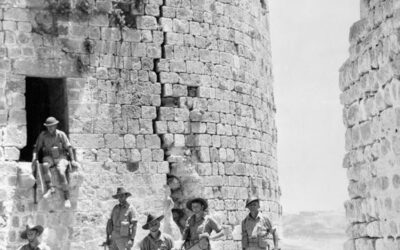
85 years ago today, a predominantly Australian force advanced into Syria and Lebanon. They were fighting against their erstwhile ally, the French. There was little hatred between the two countries, with some of the Australians having fought to defend France from Germany just over 20 years previously. And most of the young men of the Australian 7th Division tasked with the invasion would have had fathers or uncles that served in France.
But the world had changed. In the wake of the German Blitzkrieg France had collapsed, and the Vichy French regime was supporting Germany. Their colony in Syria and Lebanon threatened the Allied position in the Middle East, and their vital lifeline of the Suez canal.

How the first Bible to include a map helped spread the idea of countries with borders
Reading time: 7 minutes
The first map in a Bible is therefore a fascinating moment in history, but a troubling one. It transformed the Bible into something like a Renaissance atlas, but deeply embedded in assumptions about Christian superiority: the Holy Land of Christian imagination displacing contemporary Palestine, and Christianity superseding Judaism.
5 lessons about misinformation from ancient Greek and Roman scientists
Estimated reading time: 4 minutes
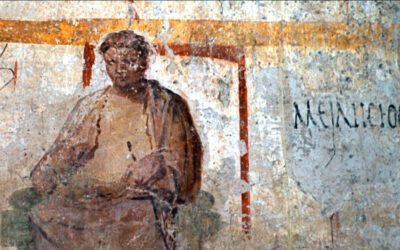
Greek philosopher Thales of Miletus, often described as the West’s first scientist, believed the whole Earth was suspended on water. Roman encyclopaedist Pliny the Elder recommended entrails, chicken brains, and mice cut in two as topical remedies for snakebite.
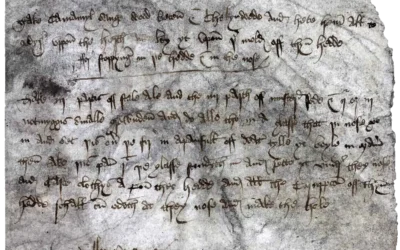
A medieval cold and flu remedy
Reading time: 4 minutes
Stale ale, ground nutmeg and mustard seeds – would you try these medieval cures for headaches and congestion? As well as advising how to treat a runny nose, these brief recipes give surprising insights into global trade in the 15th century.

Creating Paradise: A History of Gardening
Reading time: 7 minutes
If we take religious scripture such as the Old Testament, gardens have been around since the dawn of time.
“And the Lord God planted a garden eastward in Eden; and there he put the man whom he had formed” – Genesis 2:8 KJV
Even historically speaking, with the Old Testament/Torah estimated to have been written somewhere around the 6th and 4th Centuries BCE, gardens as a concept have been at least written about for nearly 2,500 years, with many examples even older.
Now, gardens are everywhere. From the small plot of the family home, to local parks, innovative botanical gardens, and great complexes such as the Royal Gardens at Kew. But what were the first gardens to exist, and how have they evolved throughout history?

85th Anniversary of the Battle of Rethimno – ‘Unsurpassed in the Annals of Australian Arms’
Reading time: 28 minutes
85 years ago today young Australian soldiers were fighting a desperate battle on the hot, dry hills of northern Crete. An isolated Australian garrison fought elite German paratroopers to a standstill, in one of Australia’s most impressive feats of military skill and endurance.
In May of 1941, as the German invasion of Crete threatened to swamp the island, a single Australian Army Brigade would find itself fighting for its life around Rethimno and its landing strip. Approaching Rethimno was the best of the best of the German army: 1,700 paratroopers of the I and III Battalions, 2nd Parachute Regiment, 7th Air Division, XI Air Corps.

Lustre – Artwork exhibition inspired by the Allied campaigns in Greece and Crete in 1941
Reading time: 2 minutes Lustre is a new temporary exhibition that explores the Allied campaigns in Greece and Crete in 1941 through the works of contemporary artists who walked in their footsteps last year. Visit the Auditorium, Lower Floor, The Anzac Memorial, Hyde...

Isidore of Seville: the patron saint of the internet who shaped knowledge for generations
Reading time: 5 minutes
Isidore was a bishop and scholar who lived in Seville in what is now Spain during a time we often call the “Dark Ages”, roughly 500–1000 AD. After the fall of the Roman Empire, much of Europe was in chaos – as if the lights had been turned off. He saw preserving and sharing information as essential to keeping civilisation alive and thriving. To do this, he wrote his most famous work, Etymologiae, which became a go-to book for centuries.
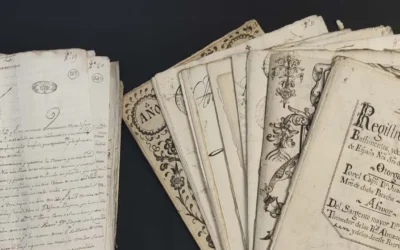
The papers of Nuestra Señora de Covadonga, a Spanish treasure galleon
Reading time: 9 minutes This previously unknown set of records from an 18th-century galleon shines a light on one of history's most significant trade routes. It was found among roughly 500,000 papers taken from ships in the Prize Papers collection, which are...
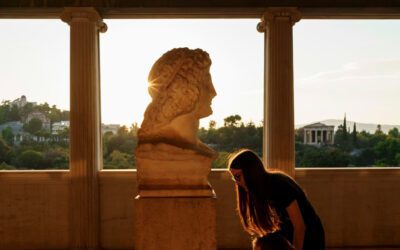
‘The waters become corrupt, the air infected’: here’s how Ancient Greeks and Romans grappled with environmental damage
Reading time: 5 minutes
The message from the ancient Greeks and Romans is as true today for us as it was for them. As humanity grapples with multiple environmental crises, it’s worth reflecting on this age-old knowledge. The bottom line is, keeping the planet in a healthy state is good not just for the environment, but also for ourselves.

Register Now! VIETNAM 30/50 Conference – Thirty Years of War/Fifty Years of Reflection – 1945-2025
Military History Conference - Melbourne and Online - Saturday 16 May 2026 9:00 AM - Sunday 17 May 2026 5:00 PM Last week to Register! Book in by 13th May. The 30 year war in Vietnam, from 1945-1975, was brutal and devastating. Book Now It killed and maimed hundreds of...

Why do we think hard work is virtuous? Max Weber’s Protestant Ethic gives a sharp answer
Reading time: 11 minutes Not long ago, a relative of mine told me he had been working so hard in the yard that he’d “literally thrown up”. He didn’t offer this as a health update, or to warn me about overexertion. It was, oddly enough, a boast. We are familiar with...

A 2,000‑year history of chucking a sickie
Reading time: 4 minutes
If the phenomenon of “taking a sickie” tells us anything, it’s that illness generates sympathy, and sympathy causes us to allow sick people time away from their duties – but this sympathy can be exploited for personal gain.
