A Computer History Time Capsule

Once upon a time, before the Internet, computer hobbyists went to great lengths to learn about their new technology. Many of these learning opportunities were inherently social: computer classes, software store hangouts, electronic bulletin board systems, and user groups.

A user group or computer club was a wonderful way to get to know people in your region who were also learning about computers. They’d meet once a week or once a month at a computer store or pizza parlor or someone’s basement. Some groups met to play and trade games, some to write software, some to explore what the world of personal computing meant for their businesses.

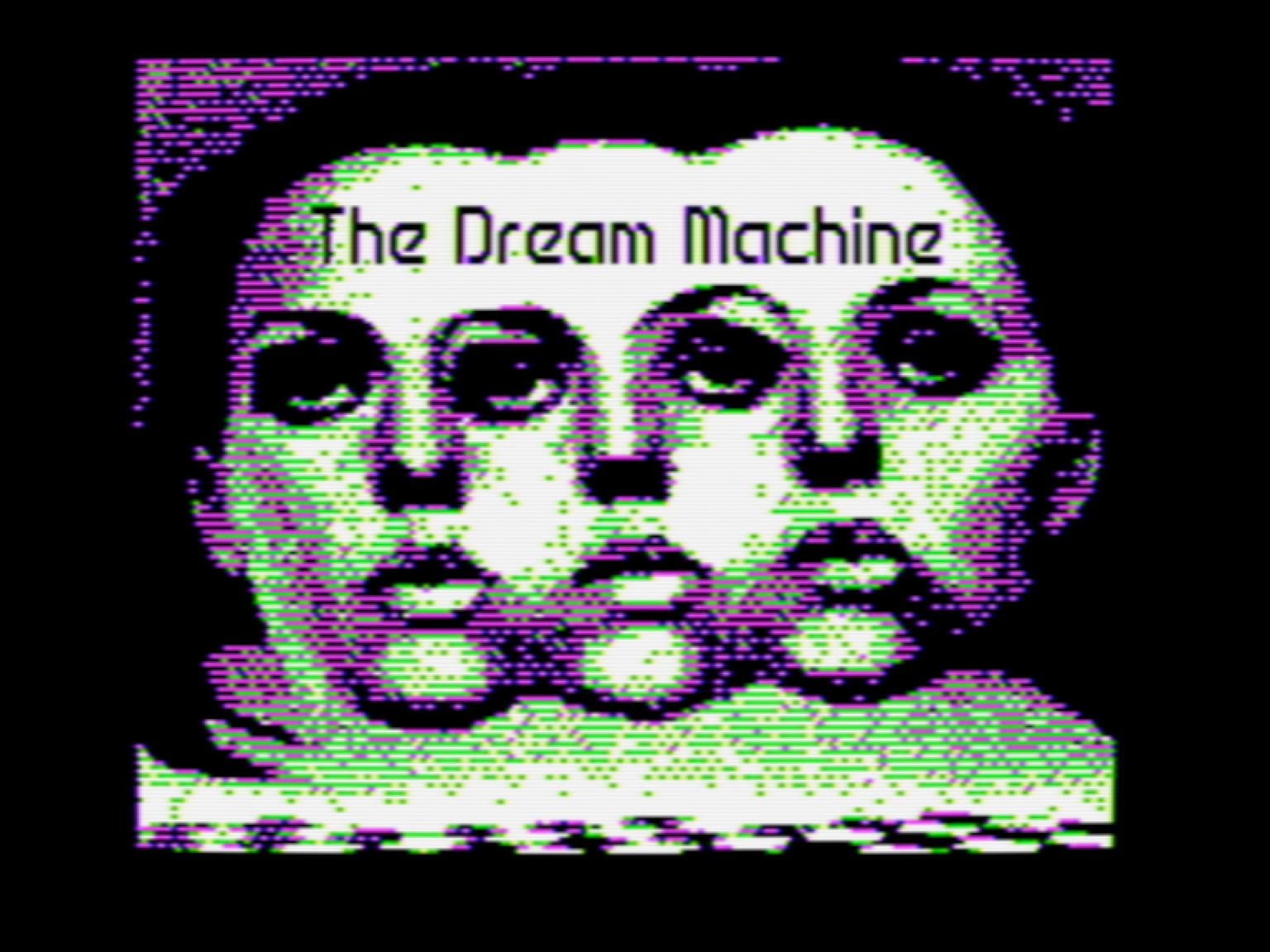
A low resolution Print Shop graphic of an alien in a space ship on the cover of THE COMMUNICATOR newsletter

One of the earliest groups was the Homebrew Computer Club in Silicon Valley, California, which had its first meeting in 1975. That was just a seed: thousands of regional computer groups quickly sprouted up around the world. Many of these groups were dedicated to one particular brand of computer, back in the day when there were countless incompatible flavors of computing machinery. Computer clubs offered various benefits to their members, such as public-domain software to trade, expert speakers at meetings, and printed newsletters.

Ultimately, easy access to information and communities on the Internet led to the demise of most regional computer clubs, and with them, the computer club newsletter. Although they’re not published anymore, these newsletters are neither gone nor forgotten: thousands of computer newsletters are still available at Internet Archive, covering every conceivable platform, programming language, and interest group.

I’m not here to share the story of newsletters in general, and not just here to talk about newsletters for my favorite old computing platform, Atari computers. I’m here to share the story of newsletters about Atari computers for one particular month, August 1987.

The Jersey Atari Computer Group was a group based in New Jersey, USA. As was pretty common, the group published a monthly newsletter for its members, and it coordinated a newsletter exchange with other Atari clubs. The secretary would mail the JACG newsletter to other groups, and in return those clubs sent their newsletters to JACG. The club secretary collected those faraway clubs’ newsletters into binders and organized them by publication date. One of those binders managed to survive the decades, and last year I was given the binder with a collection of newsletters all with a cover date of August 1987. That collection contains 50 newsletters from Atari user groups in United States, Canada, and Australia.

Presumably the club collected newsletters in that way every month, but I don’t know if any other monthly collections survived; this is the only one that I’ve found.

A screenshot of a desktop publishing system on the Atari ST, with an image of a lion in the frame, on the cover of the Santa Barbara Atari Computer Enthusiasts newsletter.

The club secretary’s careful collection of newsletters plus the accidental survival of the binder has created a perfect time capsule of the Atari computer scene that summer 39 years ago. In those 50 newsletters, hundreds of little dramas play out. Among them:

Rumors abound on reasons why Epyx has practically refused to support the 8-bit line of Ataris.”

“The ST has yet another new wave of remarkable and mind-boggling products on the way. Within our first hour at CES we saw a 4-megabyte memory board that goes into any ST without soldering.”

I’m getting sick of everybody complaining that there is no new software for the eight-Bit computers, Ever since I have joined the HNYAUG I have seen everybody complain about no new software, but nobody doing anything about it.”

“This is a notice that the AtariFest, originally scheduled for Chicago on the 25th and 26th of July, 1987, has been officially cancelled. There were several reasons for doing this, but FIRST and FOREMOST, let me dispel three major rumors that have been spread about the ‘Fest in Chicago…”

“The FCC is contemplating a move that some say will raise the cost of on-line conference and database services by a factor of between five and 15…”

It was a time of intense change for computer users: the inexpensive and beloved Atari 8-bit line was quickly becoming obsolete, being replaced by speedy and graphically powerful 16-bit computers. The Summer 1987 Consumer Electronics Show had just taken place, with enticing announcements of new hardware. The changes are evident in the content and production of those newsletters: some printed with clattery dot-matrix printers, some sleek with newfangled desktop publishing software. Some pages feature BASIC and machine language program code that users could type in; others encouraged users to get online to download programs instead.

Some common themes emerge across the newsletters: interest in going online for the first time, an uneasy relationship between computer companies and their users, worries about software piracy, and stereotypes about women in the computer world.

A seashore and lighthouse rendered in low-res printout appear on the cover of the GRASP Gazette, the newsletter of the Greater Richmond Atari Support Program

The collection is 50 snapshots of computing communities in tiny regions of the world that combine into a remarkably detailed portrait of the Atari world, 39 summers ago.

You can explore all 700 pages of newsletters here, or peruse them as 50 individual newsletters.

Internet Archive also offers a thousand more Atari newsletters. Or focus on your choice of writings about the Apple II or the Pick operating system or Texas Instruments computers or the Apple Lisa or the Dvorak keyboard … and so many more.

Book Scanning Goes Viral…Again

Five years after Eliza Zhang’s book-scanning video reached millions of people, the Internet Archive’s page-by-page approach to digitization is capturing attention all over again.

In February 2021, a video of Internet Archive book scanner Eliza Zhang turning the pages of a book went unexpectedly viral. It reached 7.7 million people in its first 48 hours and became one of our most widely seen social posts ever.

Five years later, it happened again.

As renewed attention to the way books are digitized brought new questions about our own scanning practices, people once again discovered Eliza, the Scribe, and the decidedly hands-on process behind the digital books in our collections:

A big thank you to Eliza, and to all of the book scanners, digitization staff, librarians, engineers, archivists, and volunteers who spend their days caring for the physical record and making it accessible in digital form.

Preserving a Creative Legacy: How CARTA is Safeguarding Artists’ Websites

Artists today use their websites as more than a business card– they are an online portfolio, CV, document of artistic evolution, and works of art in their own right. They are valuable records of a life’s work, yet as with all technology, they are fragile and ephemeral. They can vanish overnight due to expiring domain registrations, server migrations, software obsolescence, or administrative access loss after the passing of an artist. 

Art historians, critics, curators, and humanities scholars rely on artists’ records to understand and contextualize contemporary artistic practice. To support the accessibility and discoverability of these websites for art historical scholarship in the future, the Internet Archive’s Collaborative ART Archive (CARTA) program is working to preserve artists’ websites, ensuring that they endure as documents of an artist’s legacy. Earlier this year, CARTA led an initiative to expand the Artists’ Websites collection and to preserve underrepresented voices of artists that are at risk of disappearing from the digital cultural record. Through extensive outreach to artists and arts organizations, CARTA invited the public to nominate websites to grow the collection, including encouraging artists to submit their own websites for preservation. 

CARTA brings together art libraries, museums, and organizations from across the United States and Canada in partnership with the Internet Archive to preserve online art materials and make them permanently accessible to everyone. After an art resource is nominated by a CARTA member, web archivists take an interactive snapshot of the website to ensure the site is available in the future as it appeared on the day it was preserved. 

The librarians and archivists in the CARTA program have been championing access and preservation of artists’ websites since 2018. Members from Atlanta, Georgia to Vancouver, British Columbia have been nominating and curating websites of local artists and arts organizations that represent their diverse communities. The Getty Research Institute, for instance, nominates websites of Southern California artists and art organizations like the website of Ricardo Valverde, a Chicano photographer specializing in street photography and portraiture. He dedicated himself to photographing people, places, and events in East Los Angeles, offering a powerful counternarrative of his community and its inhabitants. In DC, the National Gallery of Art prioritizes Black artists like Tim Davis, a mixed-media painter working primarily with narratives of social justice, activism, identity, and the Black experience.

Tim Davis, Together As One, Silkscreen print, 2017

The recent public nomination call built on this longstanding preservation work by inviting artists and art organizations to contribute to the archive, and the response demonstrated just how meaningful this is for artists. One artist who submitted a website for preservation shared: “I fear this website was built long ago and may soon be nonfunctional.”

Another referenced a former technological loss: “We had a website melt down some years ago and lost everything.”

Another artist shared the personal significance of the call to archive: “This could not come at a better time as I start to work on my artist legacy and I’m thinking of ways that my website can live on once I pass and won’t be able to pay the fees after a while.  My website is an extremely important tool that I have used since 2005 when it was uploaded. It is a tool that I use daily and share with others, and helps me track my works, my exhibition history, my entire art career.  As a mid-career LatinX artist and under represented, […] it will give me peace of mind that future generations could find my work as I designed and intend the public to view it.”

Over 50 websites were selected for preservation from this public nomination process and will be archived in the upcoming weeks. Of the sites that were reviewed and recommended by CARTA’s Collection Development Committee members, many websites of Latinx artists were prioritized, showcasing the importance of preservation of these voices and artworks for the art historical record. Below are some examples from the selected websites; all websites will be accessible on https://carta.archive-it.org/ later this year.

Bibiana Suárez is a Puerto Rican artist and art educator. Her website showcases her bright graphic work that explores topics such as cock fighting, colorism, and food cultures within Puerto Rican history. The nominator added, “her work should be preserved because she asks the hard-hitting questions that allow people to take apart what creates struggles within the Puerto Rican Diaspora.”

Bibiana Suárez, (left) El niño Atocha con dálmatas / Little Jesus with Dalmatians & (right) Jackie, digital print on paper, 1997-1998

On her website, Suárez shares that her work is a reflection on her experience of acculturation after living in the US for nearly as long as she’s lived in Puerto Rico. She writes, “[w]hile I may acculturate, I resist assimilation,” a theme that is expressed throughout her work. 

Another selected artist, Consuelo Jimenez Underwood, has been exhibiting her work since the 1980s, choosing to focus on fiber arts at a time when weaving was considered “craft,” not “art.” As the daughter of a Huichol-descended father who weaved and a Mexican-American mother who embroidered, it has always been important to the artist to continue these ancestral practices and insist on their legitimacy in the world of “fine arts.” From the nominator: “Her work brings visibility to the fiber art field and reflects the experience of women, of the Latinx community, and the US/Mexico border as place.”

Consuelo Jimenez Underwood, wall installation from The Armory Show with Ruiz-Healy Art, New York, NY, 2023

Artists will continue to use the internet to create, document, and engage with their artistic practice. Websites like these document decades of an artist’s work and are essential parts of an artist’s legacy. When they disappear, we lose invaluable documentation of an artist’s career and evidence of their larger impact. Preserving these websites has become an important part of preserving art history now and CARTA is spearheading this coordinated effort to ensure these websites are available in the future. 

To learn more about CARTA and the artists’ websites that are preserved in the collections, visit https://carta.archive-it.org/.

Archiving Democracy: How the U.S. End of Term Web Archive Preserves Government History

Beginning in January 2025, we witnessed an unprecedented removal of material from U.S. federal websites — documents related to education, health, science, and more, gone from public view almost overnight. Dozens of articles appeared on this topic, including this one from IEEE Spectrum, published in February 2025, shortly after the beginning of the new presidential term. The author, Gwendolyn Rak, like many other doing research in this area, noted that not only did individual web pages change or vanish almost overnight, but that the web presence of entire agencies such as the U.S. Agency for International Development (USAID) disappeared from view. Moments like this are exactly why libraries have collaborated to build the End of Term Web Archive.

The Internet Archive has participated in the End of Term (EOT) Archive since 2004, working alongside partner institutions to capture US government websites at every presidential transition. Over time the scope has grown, but the purpose remains the same: to preserve government information and civic memory at critical moments of democratic change.

What the End of Term Archive Captures

Project partners  participate in different ways. Some carry out web archiving, while others lead in compiling lists of sites and pages that should be included, and others conduct research on findings. The crawl is carried out in distinct phases, including a pre-election capture, captures during the election, and finally captures pre- and post-inauguration. 

Lessons from the 2024/2025 Crawl 

When asked to reflect on what the team learned from the 2024/2025 crawl, Mark Graham, Director of the Wayback Machine said, “We always learn that no matter how much planning we always wind up missing material that should have been included and in scope. To do a thorough comprehensive crawl is a daunting task and we have gaps. More funding and access to resources would help us do a better job. Many people expect that this work is done by the government, but it is not. It needs to happen with trust and integrity, and we provide that.”

“Another challenge is that so much government information is now published through commercial platforms, for example X and various Meta properties. This presents both operational and policy issues around archiving these materials. Widespread Akamai and Cloudflare implementation has, I think, unintended consequences for web archiving of all sorts.” 

“Here is an example of important materials that are hosted on social media platforms that came into sharp focus after the wrap up phase from the 2024 crawl, when the US State Department announced they were going to remove social medial posts from prior administrations, including accounts of representing embassies and officials.This caused the team to go back and look at that area in particular. We identified and captured information from more than 700 accounts on the X platform alone. While we worked quickly to archive before deletion, some slipped through the cracks. For the first time we are considering a FOIA [Freedom of Information Act] request. If successful, we may use that to fill in the blanks.”

What’s Now Available

With the 2024/2025 crawl complete, petabytes of material are now available for bulk download and playback via the Wayback Machine. New to this crawl: two million videos, captured as part of the End of Term effort for the first time at this scale.

I also asked Mark to share what he is most proud of in this work. “I’m grateful that we have the opportunity to do this, along with participating partners and the support of funders. We have ample experience to carry this work out, and we have gotten better at this over time. We have seen the evidence and value of this work reflected in what has become a national conversation when so much material was removed from public access starting in January 2025. Because we have done the work, we have evidence about the removal of fundamental documents related to education, health, science and the like, and millions of web pages and web sites deleted abruptly. We’ve seen over 1000 news articles cite this work specifically.”

The End of Term Web Archive is Democracy’s Library in action. Working with the right partners, the right infrastructure, and sustained commitment, it is possible to safeguard the public record for the people it belongs to.

It’s Never Too Early to Think About Your Legacy

The Internet Archive has cultivated thousands of planned giving supporters over the years who have decided when making their legacy plans to include the Internet Archive in them as a nonprofit of choice. Tim, who turned 40, made that decision and decided it was time to think about the organizations that reflect what matters most to him and how he could help sustain their work.

He named the Internet Archive as one of his primary beneficiaries, making him a member of the Internet Archive Legacy Circle.

Growing Up Alongside the Internet

Tim grew up alongside the early internet. He built homepages, joined web rings, learned HTML, and eventually turned that early curiosity into a career working with Linux and open-source technology. “The internet, for me, is like a forest that I’ve grown up in, and I’ve seen change over time.”

Today, the Wayback Machine allows Tim to revisit some of the websites, blogs, and projects he created when he was younger. He also helps preserve the web by running Archive Warrior projects on his own server and regularly uses the Live Music Archive.

Tim, Internet Archive Legacy Circle Member and Monthly Giving Circle Member

Sharing Knowledge With Others

Throughout his career, Tim has often been the person on his team who documents how systems work and shares that information freely with others.

He even wrote a technical book, The Linux Sysadmins Guide to Virtual Disks, to provide the clear, practical guidance he felt was missing. By uploading the book to the Internet Archive, Tim has helped ensure that it remains freely available to anyone who may find it useful.

Tim also recently created famoe.ly, a project that uses the Live Music Archive’s API to analyze concert set lists and help listeners discover recordings.

Giving for Today and Tomorrow

For Tim, planning for the future also inspired him to give today. In addition to including the Internet Archive in his plans, he recently began making a monthly donation. “No reason I can’t start helping while I’m still here.”

Perhaps the most meaningful part of the experience was the peace of mind that came from putting his wishes in place. Tim shared that he now feels less worried after he is gone and less pressure to accomplish everything right now. “I know that if I can’t make the impact I want to while I’m here, I have left a meaningful contribution behind to organizations that are deeply important to me.”

Start Building Your Legacy

Tim’s story is a wonderful reminder that planned giving is not only something to consider later in life. It can begin at any age, with a simple decision about what matters to you, what you can do today, and what you hope will continue far into the future.

The Internet Archive’s estate planning program was established to provide an option for patrons who  wanted to leave a legacy by donating  assets and investments. Over the next decade, two to three trillion dollars of estate assets will transfer from Baby Boomers. Nonprofits have a lot to gain from such a wealth transfer. Therefore, a planned giving program was launched at the Internet Archive in 2022 to leverage this immense giving opportunity.

In 2026, Joy Chesbrough, the Head of Philanthropy who launched the program, decided to hire Janet Glaze to build on the accelerated growth and momentum. “Making patrons and supporters the center of our work is extremely important. Planned giving is an important cornerstone in philanthropy, and a strategic opportunity to establish long-term loyalty with our most trusted supporters”, commented Chesbrough. “I am confident that Janet Glaze will do a great job establishing new opportunities for Legacy Circle members.” By joining the Legacy Circle, supporters become part of a community committed to protecting knowledge and ensuring it remains accessible for generations to come.

If you have already included the Internet Archive in your estate plans, or are considering doing so, we would be grateful to hear from you. Sharing your intentions takes only a minute, and there is no obligation.

Please contact Janet Glaze, the Internet Archive’s Planned Giving Regional Officer if you are interested in leaving a legacy gift. If you have questions or would like to talk through your options, please fill out our Legacy Circle form, email donations@archive.org or leave a message for the Philanthropy Department at 415-561-6767.

We couldn’t do this work without your generosity. Thank you for helping preserve knowledge for generations to come.

Janet Glaze, Planned Giving Regional Officer
Internet Archive Philanthropy

Service Restored from Overnight Power Outage

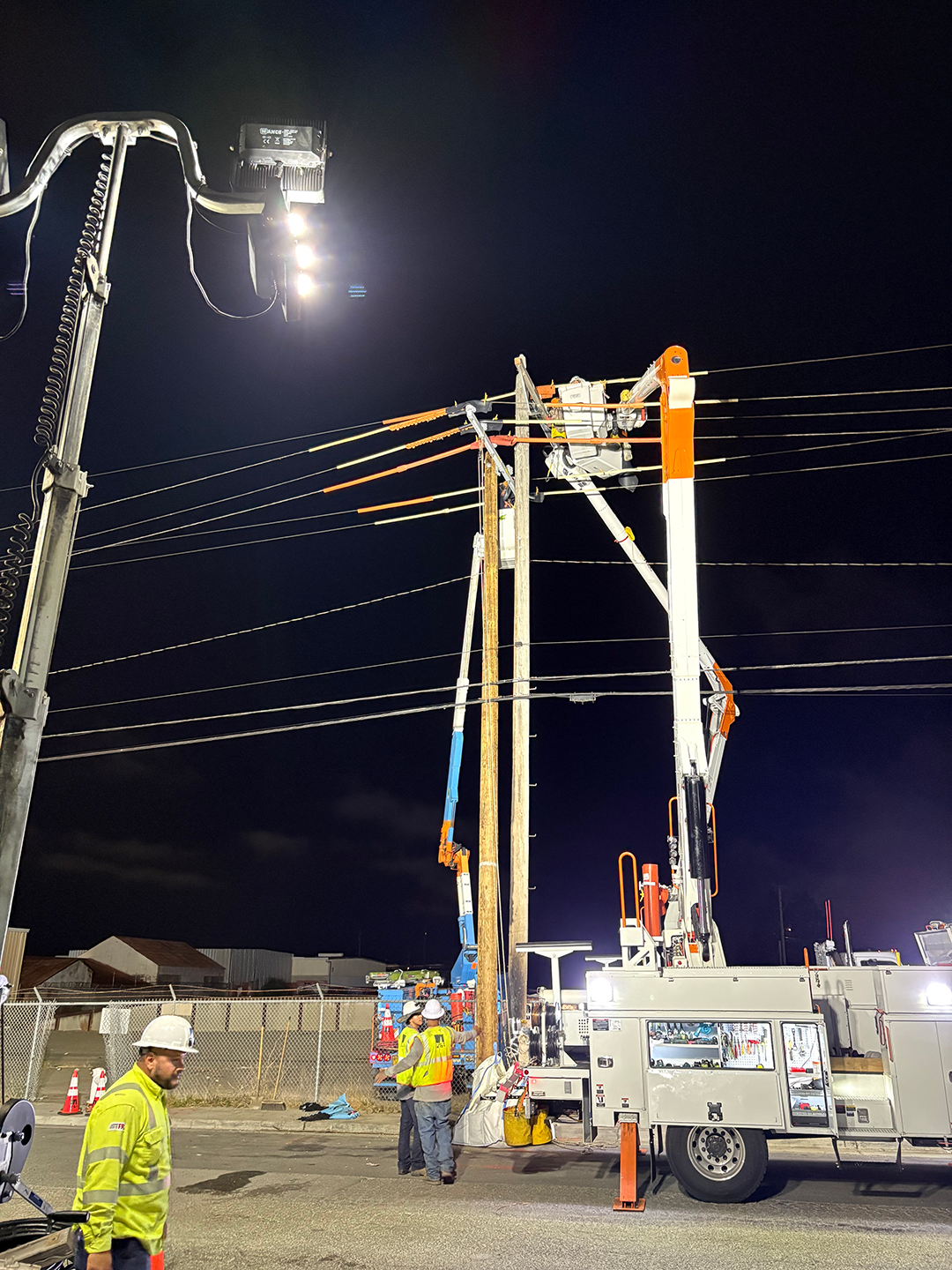
Yesterday, the Internet Archive experienced a power outage that took some of our services offline and degraded others. The power outage at one of our datacenters was caused by damage to the power feed, necessitating PG&E to repair it.

We are still bringing up the upload feature, but otherwise we are live and kicking. Please enjoy the old stuff.

PG&E crews arrived and worked until 4 a.m., alongside our infrastructure staff, to restore power. By 4:15 a.m., our fans, network, and servers were coming back online in sequence.

A big thank you to the PG&E crew and our staff for working through the night to restore services and get the Internet Archive back online.

Registration is Now Open For Internet Archive’s Annual Celebration

Democracy’s Library: Tools for Participation
Wednesday, October 21, 2026
Internet Archive, San Francisco
REGISTER: In person | Virtual

Democracy invites participation; democracies require it.

At the Internet Archive, we believe libraries can help make that participation possible by preserving knowledge and providing the tools to explore and build upon it. This year, our annual celebration, “Democracy’s Library: Tools for Participation,” will showcase the many ways people can participate through the Internet Archive—from saving and contributing materials to exploring government records, researching history, and building new tools with our collections and APIs.

We’ll celebrate the Wayback Machine and the many other Internet Archive tools that help people preserve, explore, share, and build knowledge together.

We’ll also spotlight partners and creators who are building on top of the Internet Archive’s data and infrastructure, demonstrating how shared library resources can become a foundation for discovery and collaboration. In person and via livestream, we’ll explore what happens when a library doesn’t just preserve knowledge, but gives people the tools to use it, build with it, and participate in creating what comes next.

Celebrate with us!

Our annual celebration is a hybrid event, with an in-person street party at Internet Archive headquarters in San Francisco and a livestream for those joining from afar.

In person: Wednesday, October 21, at 300 Funston Avenue, San Francisco.
REGISTER NOW

Virtual: Join the livestream from wherever you are.
REGISTER NOW


Go behind the scenes at the Physical Archive

Doors Open

Doors Open: Go Behind the Scenes at the Physical Archive
Tuesday, October 20, 2026

Physical Archive, Richmond, California
REGISTER: In person

The celebration begins the night before with a special opportunity to peek behind the doors of the Physical Archive in Richmond, California.

Join us on Tuesday, October 20, from 6–8 p.m. for a behind-the-scenes tour of the physical collections of books, music, film, and video.

This special insider event offers a look at the lifecycle of physical materials—from donation and preservation to digitization and access. We’ll also have samples from generous donations and acquisitions of books, records, microfiche, and more on display.

Light refreshments will be provided.

REGISTER NOW

On-site parking is limited. Guests are encouraged to use alternate transportation.

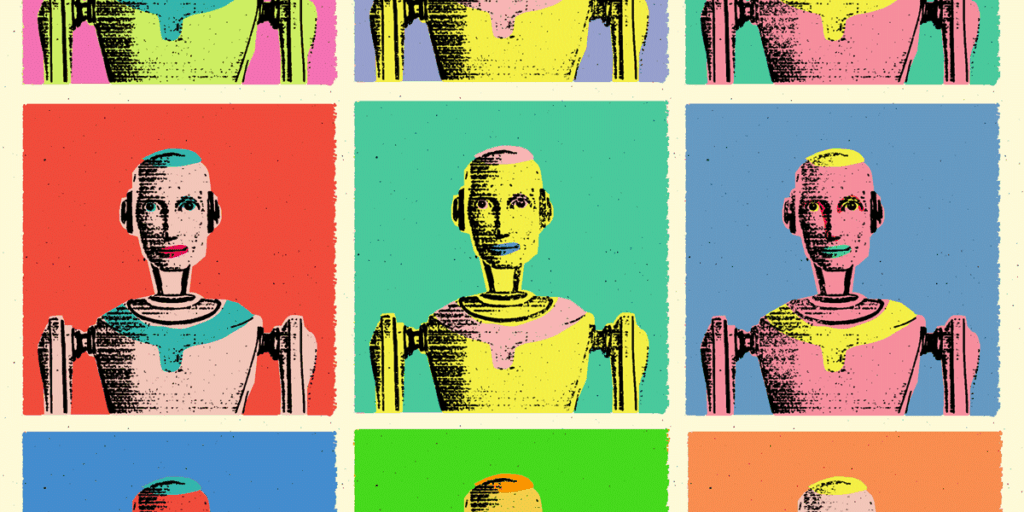
Vintage Artificial Intelligence: Before It Got Awkward

Long before the current kerfuffle about LLMs, Generative AI Artwork, and asking your tax preparation chatbot for a cookie recipe, the concept of artificial intelligence and synthetic life was a pervasive theme in creative and engineering works. We have the ground-breaking appearance of Rossum’s Universal Robots (or Tik-Tok, the Royal Army of Oz), through countless science-fiction properties and incredibly positive futurist home-making advertisements, and into the inevitable portrayal of dark and dystopian empires providing humans with nothing but a clear and present ending to their story arc. Artificial Intelligence has been riding along with humanity’s storytelling and expressiveness for many generations – and, one might argue, it is this ever-present influence and inspiration that has driven a lot of the modern phrasing and design in our most contemporary toys and tools wearing the vestements of consciousness.

The motivations are clear: our endless curiosity of the nature of our minds and humanity, the twists and turns that come when the synthetic mirror-images of people betray unintended consequences, and the fact that human beings look amazing when rendered in chrome.

But before we get swept up too much into the echoes of the past and see patterns of AI-like entities into the distant generations (golems, anyone?) let us instead zoom into a very specific family of projects and products that are presented at the Internet Archive for the research, education, and enjoyment of all:

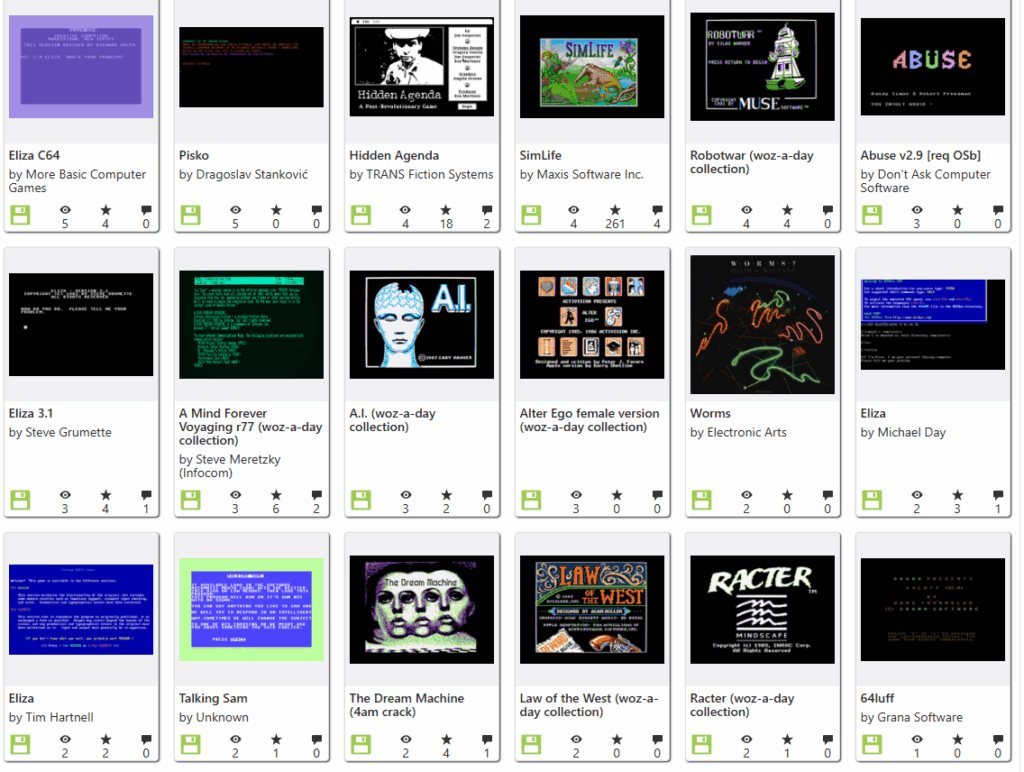
The newly-minted Vintage Artificial Intelligence collection.

Dating roughly from the 1970s through the 1990s, these emulated software packages have come from many sources, and with many motivations, but have been curated together for a very subtle and occasionally imperceptible theme: the adventure of experiencing a machine that thinks.

To be clear, and without taking too much time for a press conference announcing so or claiming such for a future IPO, none of the programs in this collection come within a solar system of thinking in any actual sense. They are, instead, portrayals on microcomputers and game consoles of the idea of thinking machines, the experience of creating autonomous or semi-autonomous virtual entities, and playing games with the illusion of a contemplative and improvisational opponent.

“Delve” is a very popular word with machines, Jason said ironically, as well as em-dash. Let’s delve into some of the odd ways artificial intellgence begin appearing with these programs in the early days of home computers. Em-dash.

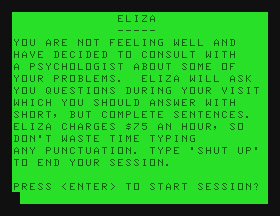
The most obvious and pervasive example for Artificial Intelligence is Joseph Weizenbaum’s ELIZA, named after Eliza Doolittle in Pygmalion, and which began its artificial life as a program that would run various conversational scripts, of which its main first one, DOCTOR, was so popular in putting on the appearance of an interested psychologist that users famously opened up to the question and answer process it provided as if talking to a real person. While Weizenbaum wrote throughout his life of the over-abundant assumptions of the program, it was still enough of a successful gimmick that the program was ported and re-written dozens of times, many examples of which are at the archive: Eliza, Eliza, Eliza, Eliza, Eliza, Eliza, Eliza, Eliza, Eliza, Eliza, Eliza, Eliza, Ms. Eliza, Eliza, Eliza, German Eliza, German Eliza, Eliza, Eliza, and, finally, Psycho Eliza.

Eliza is the gold standard of the promise of artificial intelligence and the program was simple enough to encourage easy porting to various platforms, which is why you can click on many of the links to find yourself inside Apple II, Radio Shack Color Computer, Palmpilot, Atari 800, and many more home computer machines of the 1980s.

Naturally, the idea of “talk to something that sort of responds to you like a person, preferably like Eliza did” had innovation, parody and experimentation, leading to some of these other programs in the collection: Dr. Z (Eliza, but it ignores what you are saying) Talking Sam (which is more or less a demo for a speech synthesizer) Hyper Psych (A Therapist in Hypercard Format) DR. SPOC (another therapist) Abuse (which answers in a hostile way to your conversation) Pisko (which is a parody, and also requires you to talk to it in Serbian).

A program in this vein deserves special attention. Racter (short for Raconteur) (MS-DOS version here) is a very early commercial version of a chatbot – it was written to literally write sentences and stories that sounded authentically created, and even wrote some published short works. They sound exactly like you might think they would sound: “Bill sings to Sarah. Sarah sings to Bill. Perhaps they will do other dangerous things together. They may eat lamb or stroke each other. They may chant of their difficulties and their happiness. They have love but they also have typewriters. That is interesting.” This work eventually led to this commercial program, Racter, which you could hold conversations with and which could do a relatively eerie experience of conversations. At the time this program was released (1985), a small trickle of reviews and articles speculated on the ramifications of such a program existing, which look and sound, frankly, like someone bringing a bucket to catch what ultimately is a 100 foot tidal wave coming in from the 21st Century’s shore.

With the lens of the modern era to look back, and billions of dollars spent on the project and maintenance of the current systems, it’s easy to dismiss these older programs as toys or forgettable jaunts, but they carried with them the weight of a machine imbued with at least a fuzzy sense of character and thought. At a time when functioning spreadsheets were revolutionary to business and desktop publishing was looming over the audience and potential costs of printed communication, it seemed only natural these machines might become some possible type of being, and that being could be had for a price. The profits could, with some luck and opportunity, raise a fortune.

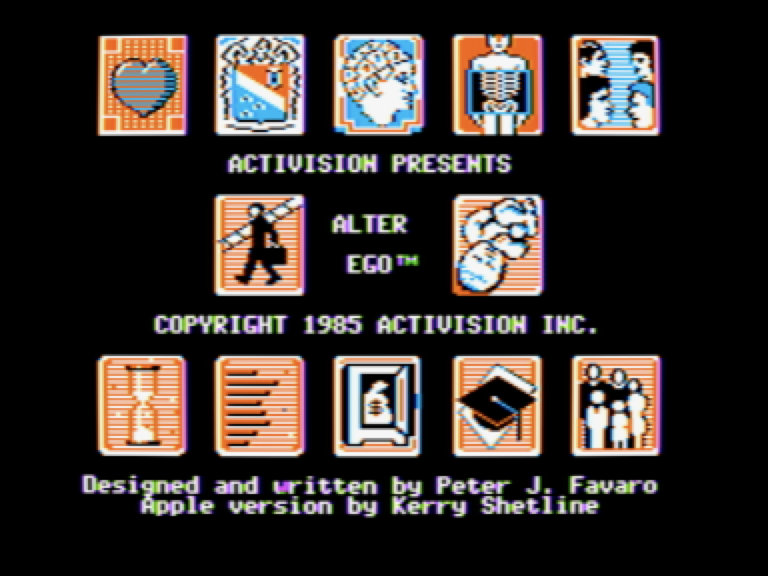
Activision of the 1980s, essentially a completely different company than the contemporary concern of today, did two major experiments in artificial intelligence-like products, seeking to find oddball variants of simple video games or productivity software.

Alter Ego (male and female versions) was developed by a psychologist as an exporation of decisions and consequences in life, allowing the player to take over a persona (an “alter ego”) and guide them through stages of childhood, teenage years, adulthood, and so on. Premature death was not off the table, nor were examples of the dark and light aspects of life, portrayed in interactive steps. Along the way, you would gain points towards various attributes of the personality (providing a game-like function) and ultimately, help to craft a more accomplished and successful life. It is, in other words, a classic RPG (Role-Playing Game) with a hint of a sense of an actual life being somewhere down there inside your home computer.

The other Activision creation, Little Computer People, is both an interesting choice and experience of the time. The conceit was simple – that people were discovered living inside computers, and this program gave the user a chance to see them living their otherwise hidden lives. Think The Sims, but Much, Much Smaller. Through clever programming (thanks to the work of programmer David Crane, of Pitfall! fame), the game had a lot of flexibilty and variance for the “inhabitants”: hundreds of names, variance in moods and willingness to listen, and other bits of illusion of life.

That illusion, that something living and functioning is buried somewhere among the code, that a program has created life from the darkness of ones and zeroes, is the most frequent aspect of all these programs, but was an actual selling point for some of the items in this collection.

The games Murder on the Zinderneuf, Suspended, Deadline, and The Hobbit all leaned heavily into scripted movements and off-screen antics of the characters inside them. At the time of its release, Deadline was reported on in general news articles about the possibility of literary characters who were quietly living their own lives, only mildly engaged with the game player, and who only interacted with narration and story when happenstance provided it. The Hobbit was legendary for the fact that the programmer of the non-player characters, Veronika Megler, held to the belief of the autonomy of the world outside the player so strongly that sometimes world-changing events (characters fighting, resulting in the loss of one) could happen entirely out of control and context, only revealing the game was unwinnable later. Suspended, in which the player is a cryogenically frozen mind restored to action to help handle an emergency, split consciousness and awareness to six different functioning robots, meaning only one could access information, another pick up items, and so on. The perception that reality is maleable, that work can happen in the background outside your awareness and return the results to you, finds itself referenced in the structure of modern AI agents and how they are sold to public and industry.

But avoiding rabbit holes of arguing humanity and mind inside code, let’s pull back to one of the other genres curated in this collection: autonomous agent programming.

There have been an entire family of games that consist of pre-programming the skills and processes of some manner of automaton (in the form of robots, worms, and so on), setting your programmed warrior into the arena, and seeing if they win. Examples of this include Robot War, Worms and Fortress. These humble-by-comparison programs make obvious what is not always expressed – that a number of simple rules, presented quickly and without intervention, can give incredibly powerful illusions of autonomy and intelligence, as long as you don’t look so closely.

And onward we go. For a solid amount of the late 20th century, the very computers we had created and made part of our lives could be used to tell stories that the computers themselves were alive.

And maybe a few of us believed it!

The collection ranges into other tangents of this arena, well worth exploring, but left as something for you, the intelligent agent at the keyboard, to browse around and play with. From programming languages based around logic rules to groundbreaking examples of what were called “expert systems” before they got renamed to “your new manager”, Vintage Artificial Intelligence has something for everyone, machine and person alike.

Try it out.

Vanishing Culture Episode #6: What We’ve Learned with Vida Vojić & Alice Bridgwood

What does it mean to preserve culture in an age of disappearing websites, platform-controlled media, and fragile digital memories? In the final episode of our special six-part series on Vanishing Culture, Future Knowledge hosts Dave Hansen and Chris Freeland sit down with musician and series host Vida Vojić and producer Alice Bridgwood to reflect on the conversations, ideas, and lessons that emerged throughout the series.

MORE INFO: https://futureknowledge.transistor.fm/episodes/vanishing-culture-6-what-weve-learned-with-vida-vojic-alice-bridgwood

Looking back on discussions about cookbooks, queer archives, African folklore, Papiamento, and more, Vida and Alice explore the common threads connecting seemingly disparate forms of cultural preservation. They reflect on how culture is shaped not only by institutions, but by communities and individuals who choose what to remember, share, and pass on. The conversation examines the challenges of living in an “age of platforms,” the risks of relying on technology and corporations to steward cultural memory, and the growing movement toward community-driven preservation efforts. Along the way, the group discusses what surprised them most, how the series changed their own habits and perspectives, and why they remain hopeful that people everywhere can play an active role in keeping culture alive. Rather than ending on a note of loss, the episode offers a hopeful reminder that culture survives when people care enough to preserve, share, and reimagine it together.

Vanishing Culture is a special six-part series from the Future Knowledge podcast, produced by the Internet Archive and Authors Alliance, exploring what happens when our shared cultural heritage disappears, and what we can do to preserve it. View the full series

The series is inspired by the Internet Archive’s new book, Vanishing Culture, a collection of essays by scholars, artists, librarians, and preservationists examining why culture disappears in the digital age, and what can be done to save it. Together, the book and podcast offer complementary perspectives on one of the defining challenges of our time: preserving humanity’s cultural record in an increasingly fragile digital world.

Internet Archive to New York: Don’t Kill the Good Bots in the Fight Against Bad Bots

We’re joining with EFF and other civil society groups asking the Governor of New York to veto the Stealth Crawler Prohibition Act. Here’s why.

Image courtesy EFF.

News publishers have a real problem: AI companies are sending aggressive, anonymous bots to scrape websites at a scale that strains servers and drives up infrastructure costs. It’s happening not just to publishers, but also to Wikipedia, libraries and to the Internet Archive itself. We all have a stake in finding workable solutions.

But not all bots are bad. Long before AI, automated tools, which many people colloquially call “bots,” such as web crawlers have helped preserve the web, support research, improve security, and power investigative journalism. Libraries use them to archive disappearing websites. Researchers use them to study the web and test security. Journalists use them to uncover how powerful companies and institutions operate online. These are some of the good bots that power the online infrastructure that helps keep us safe and hold the powerful accountable.

As EFF explains, New York’s Stealth Crawler Prohibition Act risks killing off the good bots along with the bad in an attempt to prohibit abusive AI scraping. The law, now sitting on Governor Hochul’s desk, would require every operator of an automated access tool to disclose their identity, affiliation, purpose, as well as all potential uses of the public news content they access. It would also let any news publisher demand that any anonymous tool unmask itself, and pursue court orders to force that disclosure, without first showing any evidence of wrongdoing. This mandatory identification would allow websites to block or engage in other forms of retaliation against archivists, journalists, or researchers that use these tools for the public good. Further, because the law only applies to news websites, it would do nothing to help Wikipedia and other knowledge repositories that are burdened by aggressive crawlers.

The problem isn’t anonymous bots. The problem is excessive, harmful scraping. We need targeted solutions for abusive AI practices, while actively protecting the rights of libraries, researchers, journalists, and readers alike. That’s why the Internet Archive has joined EFF and other civil liberties organizations in asking Governor Hochul to veto the Stealth Crawler Prohibition Act. It’s important to stop bad actors from straining news sites, but a law written for this purpose shouldn’t hand corporations a tool to dismantle crucial civic infrastructure. Let’s work together to solve the real problem without undermining the tools that preserve knowledge, enable journalism, and support democracy. Read the full letter here.