Category Archives: Announcements

Book Scanning Goes Viral…Again

Five years after Eliza Zhang’s book-scanning video reached millions of people, the Internet Archive’s page-by-page approach to digitization is capturing attention all over again.

In February 2021, a video of Internet Archive book scanner Eliza Zhang turning the pages of a book went unexpectedly viral. It reached 7.7 million people in its first 48 hours and became one of our most widely seen social posts ever.

Five years later, it happened again.

As renewed attention to the way books are digitized brought new questions about our own scanning practices, people once again discovered Eliza, the Scribe, and the decidedly hands-on process behind the digital books in our collections:

A big thank you to Eliza, and to all of the book scanners, digitization staff, librarians, engineers, archivists, and volunteers who spend their days caring for the physical record and making it accessible in digital form.

Archiving Democracy: How the U.S. End of Term Web Archive Preserves Government History

Beginning in January 2025, we witnessed an unprecedented removal of material from U.S. federal websites — documents related to education, health, science, and more, gone from public view almost overnight. Dozens of articles appeared on this topic, including this one from IEEE Spectrum, published in February 2025, shortly after the beginning of the new presidential term. The author, Gwendolyn Rak, like many other doing research in this area, noted that not only did individual web pages change or vanish almost overnight, but that the web presence of entire agencies such as the U.S. Agency for International Development (USAID) disappeared from view. Moments like this are exactly why libraries have collaborated to build the End of Term Web Archive.

The Internet Archive has participated in the End of Term (EOT) Archive since 2004, working alongside partner institutions to capture US government websites at every presidential transition. Over time the scope has grown, but the purpose remains the same: to preserve government information and civic memory at critical moments of democratic change.

What the End of Term Archive Captures

Project partners  participate in different ways. Some carry out web archiving, while others lead in compiling lists of sites and pages that should be included, and others conduct research on findings. The crawl is carried out in distinct phases, including a pre-election capture, captures during the election, and finally captures pre- and post-inauguration. 

Lessons from the 2024/2025 Crawl 

When asked to reflect on what the team learned from the 2024/2025 crawl, Mark Graham, Director of the Wayback Machine said, “We always learn that no matter how much planning we always wind up missing material that should have been included and in scope. To do a thorough comprehensive crawl is a daunting task and we have gaps. More funding and access to resources would help us do a better job. Many people expect that this work is done by the government, but it is not. It needs to happen with trust and integrity, and we provide that.”

“Another challenge is that so much government information is now published through commercial platforms, for example X and various Meta properties. This presents both operational and policy issues around archiving these materials. Widespread Akamai and Cloudflare implementation has, I think, unintended consequences for web archiving of all sorts.” 

“Here is an example of important materials that are hosted on social media platforms that came into sharp focus after the wrap up phase from the 2024 crawl, when the US State Department announced they were going to remove social medial posts from prior administrations, including accounts of representing embassies and officials.This caused the team to go back and look at that area in particular. We identified and captured information from more than 700 accounts on the X platform alone. While we worked quickly to archive before deletion, some slipped through the cracks. For the first time we are considering a FOIA [Freedom of Information Act] request. If successful, we may use that to fill in the blanks.”

What’s Now Available

With the 2024/2025 crawl complete, petabytes of material are now available for bulk download and playback via the Wayback Machine. New to this crawl: two million videos, captured as part of the End of Term effort for the first time at this scale.

I also asked Mark to share what he is most proud of in this work. “I’m grateful that we have the opportunity to do this, along with participating partners and the support of funders. We have ample experience to carry this work out, and we have gotten better at this over time. We have seen the evidence and value of this work reflected in what has become a national conversation when so much material was removed from public access starting in January 2025. Because we have done the work, we have evidence about the removal of fundamental documents related to education, health, science and the like, and millions of web pages and web sites deleted abruptly. We’ve seen over 1000 news articles cite this work specifically.”

The End of Term Web Archive is Democracy’s Library in action. Working with the right partners, the right infrastructure, and sustained commitment, it is possible to safeguard the public record for the people it belongs to.

Service Restored from Overnight Power Outage

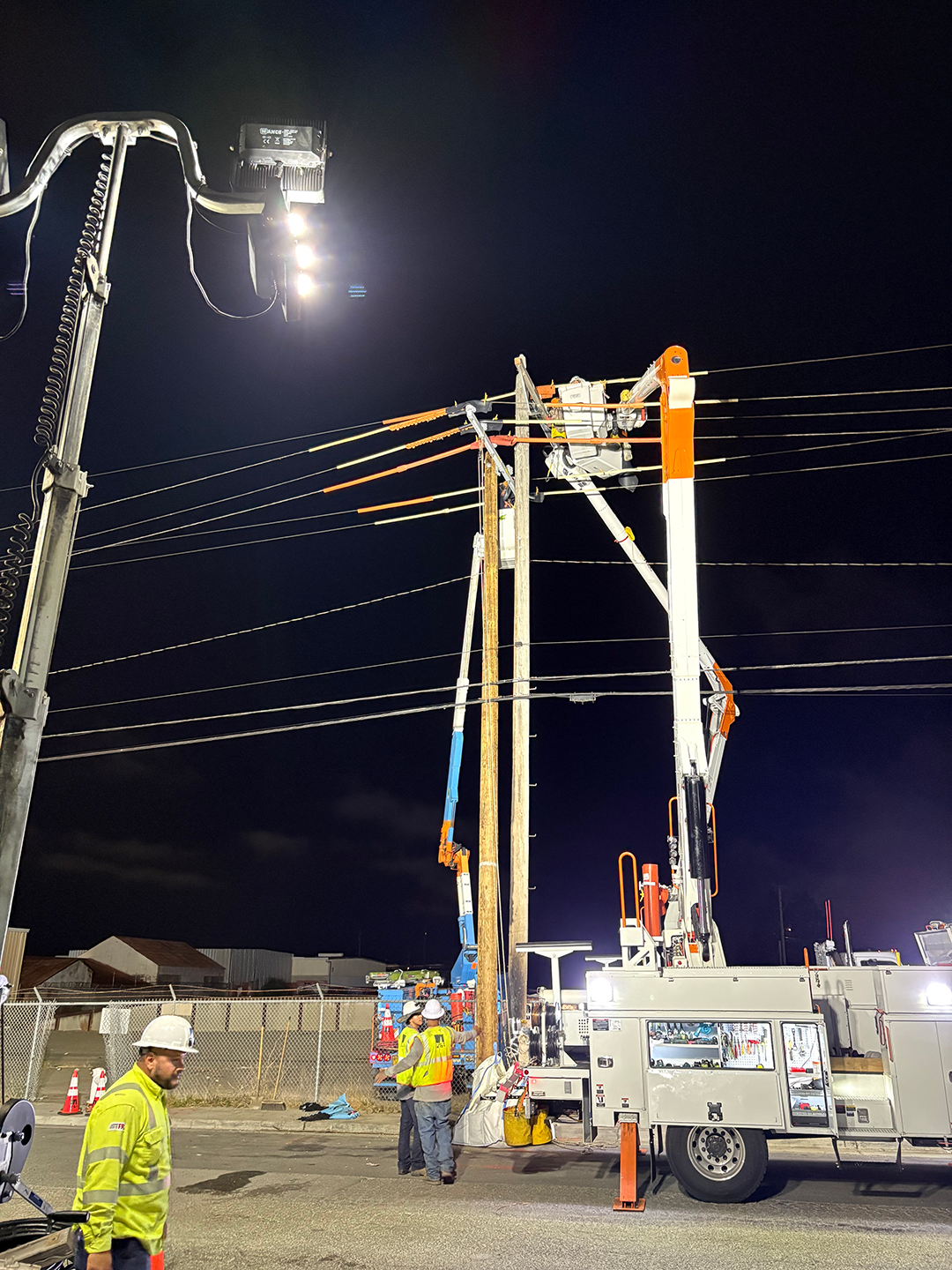
Yesterday, the Internet Archive experienced a power outage that took some of our services offline and degraded others. The power outage at one of our datacenters was caused by damage to the power feed, necessitating PG&E to repair it.

We are still bringing up the upload feature, but otherwise we are live and kicking. Please enjoy the old stuff.

PG&E crews arrived and worked until 4 a.m., alongside our infrastructure staff, to restore power. By 4:15 a.m., our fans, network, and servers were coming back online in sequence.

A big thank you to the PG&E crew and our staff for working through the night to restore services and get the Internet Archive back online.

Registration is Now Open For Internet Archive’s Annual Celebration

Democracy’s Library: Tools for Participation
Wednesday, October 21, 2026
Internet Archive, San Francisco
REGISTER: In person | Virtual

Democracy invites participation; democracies require it.

At the Internet Archive, we believe libraries can help make that participation possible by preserving knowledge and providing the tools to explore and build upon it. This year, our annual celebration, “Democracy’s Library: Tools for Participation,” will showcase the many ways people can participate through the Internet Archive—from saving and contributing materials to exploring government records, researching history, and building new tools with our collections and APIs.

We’ll celebrate the Wayback Machine and the many other Internet Archive tools that help people preserve, explore, share, and build knowledge together.

We’ll also spotlight partners and creators who are building on top of the Internet Archive’s data and infrastructure, demonstrating how shared library resources can become a foundation for discovery and collaboration. In person and via livestream, we’ll explore what happens when a library doesn’t just preserve knowledge, but gives people the tools to use it, build with it, and participate in creating what comes next.

Celebrate with us!

Our annual celebration is a hybrid event, with an in-person street party at Internet Archive headquarters in San Francisco and a livestream for those joining from afar.

In person: Wednesday, October 21, at 300 Funston Avenue, San Francisco.
REGISTER NOW

Virtual: Join the livestream from wherever you are.
REGISTER NOW


Go behind the scenes at the Physical Archive

Doors Open

Doors Open: Go Behind the Scenes at the Physical Archive
Tuesday, October 20, 2026

Physical Archive, Richmond, California
REGISTER: In person

The celebration begins the night before with a special opportunity to peek behind the doors of the Physical Archive in Richmond, California.

Join us on Tuesday, October 20, from 6–8 p.m. for a behind-the-scenes tour of the physical collections of books, music, film, and video.

This special insider event offers a look at the lifecycle of physical materials—from donation and preservation to digitization and access. We’ll also have samples from generous donations and acquisitions of books, records, microfiche, and more on display.

Light refreshments will be provided.

REGISTER NOW

On-site parking is limited. Guests are encouraged to use alternate transportation.

Vanishing Culture Episode #6: What We’ve Learned with Vida Vojić & Alice Bridgwood

What does it mean to preserve culture in an age of disappearing websites, platform-controlled media, and fragile digital memories? In the final episode of our special six-part series on Vanishing Culture, Future Knowledge hosts Dave Hansen and Chris Freeland sit down with musician and series host Vida Vojić and producer Alice Bridgwood to reflect on the conversations, ideas, and lessons that emerged throughout the series.

MORE INFO: https://futureknowledge.transistor.fm/episodes/vanishing-culture-6-what-weve-learned-with-vida-vojic-alice-bridgwood

Looking back on discussions about cookbooks, queer archives, African folklore, Papiamento, and more, Vida and Alice explore the common threads connecting seemingly disparate forms of cultural preservation. They reflect on how culture is shaped not only by institutions, but by communities and individuals who choose what to remember, share, and pass on. The conversation examines the challenges of living in an “age of platforms,” the risks of relying on technology and corporations to steward cultural memory, and the growing movement toward community-driven preservation efforts. Along the way, the group discusses what surprised them most, how the series changed their own habits and perspectives, and why they remain hopeful that people everywhere can play an active role in keeping culture alive. Rather than ending on a note of loss, the episode offers a hopeful reminder that culture survives when people care enough to preserve, share, and reimagine it together.

Vanishing Culture is a special six-part series from the Future Knowledge podcast, produced by the Internet Archive and Authors Alliance, exploring what happens when our shared cultural heritage disappears, and what we can do to preserve it. View the full series

The series is inspired by the Internet Archive’s new book, Vanishing Culture, a collection of essays by scholars, artists, librarians, and preservationists examining why culture disappears in the digital age, and what can be done to save it. Together, the book and podcast offer complementary perspectives on one of the defining challenges of our time: preserving humanity’s cultural record in an increasingly fragile digital world.

Internet Archive to New York: Don’t Kill the Good Bots in the Fight Against Bad Bots

We’re joining with EFF and other civil society groups asking the Governor of New York to veto the Stealth Crawler Prohibition Act. Here’s why.

Image courtesy EFF.

News publishers have a real problem: AI companies are sending aggressive, anonymous bots to scrape websites at a scale that strains servers and drives up infrastructure costs. It’s happening not just to publishers, but also to Wikipedia, libraries and to the Internet Archive itself. We all have a stake in finding workable solutions.

But not all bots are bad. Long before AI, automated tools, which many people colloquially call “bots,” such as web crawlers have helped preserve the web, support research, improve security, and power investigative journalism. Libraries use them to archive disappearing websites. Researchers use them to study the web and test security. Journalists use them to uncover how powerful companies and institutions operate online. These are some of the good bots that power the online infrastructure that helps keep us safe and hold the powerful accountable.

As EFF explains, New York’s Stealth Crawler Prohibition Act risks killing off the good bots along with the bad in an attempt to prohibit abusive AI scraping. The law, now sitting on Governor Hochul’s desk, would require every operator of an automated access tool to disclose their identity, affiliation, purpose, as well as all potential uses of the public news content they access. It would also let any news publisher demand that any anonymous tool unmask itself, and pursue court orders to force that disclosure, without first showing any evidence of wrongdoing. This mandatory identification would allow websites to block or engage in other forms of retaliation against archivists, journalists, or researchers that use these tools for the public good. Further, because the law only applies to news websites, it would do nothing to help Wikipedia and other knowledge repositories that are burdened by aggressive crawlers.

The problem isn’t anonymous bots. The problem is excessive, harmful scraping. We need targeted solutions for abusive AI practices, while actively protecting the rights of libraries, researchers, journalists, and readers alike. That’s why the Internet Archive has joined EFF and other civil liberties organizations in asking Governor Hochul to veto the Stealth Crawler Prohibition Act. It’s important to stop bad actors from straining news sites, but a law written for this purpose shouldn’t hand corporations a tool to dismantle crucial civic infrastructure. Let’s work together to solve the real problem without undermining the tools that preserve knowledge, enable journalism, and support democracy. Read the full letter here.

Vanishing Culture Episode #5: A Language Worth Saving with Peter Scholing

Languages can vanish just as easily as books, websites, or archives—and when they do, entire ways of understanding the world can disappear with them. In the fifth episode of our special six-part series on Vanishing Culture, host Vida Vojić speaks with Peter Scholing of Biblioteca Nacional Aruba and the Coleccion Aruba digital heritage platform about the importance of preserving Papiamento, Aruba’s creole language, and the cultural heritage it carries.

Peter shares the story of how Aruba’s libraries, archives, and cultural institutions came together to build a digital collection that now preserves hundreds of thousands of documents, photographs, newspapers, recordings, and books. The conversation explores the unique preservation challenges facing island communities, from geographic isolation and climate risks to the legacy of colonialism, which has scattered much of Aruba’s historical record across multiple countries and languages. Peter explains why expanding access to materials in Papiamento is essential for education, cultural identity, and historical understanding, and how digitization is helping unlock previously inaccessible collections. Looking ahead, he discusses the opportunities new technologies offer for smaller languages and why ensuring a vibrant digital future for Papiamento is a crucial part of preserving Aruba’s culture for generations to come.

Vanishing Culture is a special six-part series from the Future Knowledge podcast, produced by the Internet Archive and Authors Alliance, exploring what happens when our shared cultural heritage disappears, and what we can do to preserve it. View the full series

The series is inspired by the Internet Archive’s new book, Vanishing Culture, a collection of essays by scholars, artists, librarians, and preservationists examining why culture disappears in the digital age, and what can be done to save it. Together, the book and podcast offer complementary perspectives on one of the defining challenges of our time: preserving humanity’s cultural record in an increasingly fragile digital world.

Vanishing Culture Episode #4: Keeping African Folktales Alive with Helen Nde & Laura Gibbs

Folktales are more than stories—they are living records of culture, identity, and collective memory. In the fourth episode of our special six-part series on Vanishing Culture, host Vida Vojić speaks with writer and researcher Helen Nde, founder of Mythological Africans, and folklorist Laura Gibbs about the importance of preserving African folklore in the digital age. Together, they explore how stories help communities understand themselves, pass down knowledge across generations, and make sense of a changing world.

MORE INFO: https://futureknowledge.transistor.fm/episodes/vanishing-culture-4-keeping-african-folktales-alive-with-helen-nde-laura-gibbs

The conversation examines the challenges of preserving oral traditions, from the distortions introduced by colonial collectors to the loss of context when dynamic storytelling practices are reduced to written records. Helen and Laura discuss how digitization can help make folklore more accessible and discoverable, while also opening new possibilities for communities to share and reinterpret their stories online. They also reflect on the importance of trustworthy archives in an era when myths and historical narratives are increasingly used to shape political and cultural identities. Ultimately, the episode asks what it will take to ensure that these rich storytelling traditions remain available—not as relics of the past, but as living resources for future generations.

Vanishing Culture is a special six-part series from the Future Knowledge podcast, produced by the Internet Archive and Authors Alliance, exploring what happens when our shared cultural heritage disappears, and what we can do to preserve it. View the full series

The series is inspired by the Internet Archive’s new book, Vanishing Culture, a collection of essays by scholars, artists, librarians, and preservationists examining why culture disappears in the digital age, and what can be done to save it. Together, the book and podcast offer complementary perspectives on one of the defining challenges of our time: preserving humanity’s cultural record in an increasingly fragile digital world.

Keeping Knowledge Accessible Starts Here: Subscribe to the Empowering Libraries Newsletter.

Every day, information professionals at libraries, archives, museums and research organizations all over the world work to ensure that knowledge remains available for future generations. From preserving websites before they disappear to digitizing books, safeguarding government information, and expanding access to cultural heritage, there’s always something happening behind the scenes.

Internet Archive’s Empowering Libraries newsletter brings those stories directly to your inbox.

Subscribe today and receive updates—every two weeks or so—on:

  • The Wayback Machine and web preservation;
  • Democracy’s Library and efforts to preserve public information;
  • Digital preservation projects from around the world;
  • Open Library and expanding access to books;
  • New tools, collections, and research resources;
  • Upcoming events, webinars, and opportunities to participate;
  • Stories from librarians, archivists, and others working to build a more accessible future for knowledge.

What’s inside? Check out a recent issue.

Whether you work in a library, archive, museum, school, or simply believe that information should remain accessible to everyone, Empowering Libraries offers a behind-the-scenes look at the work of preserving our shared digital heritage.

The newsletter is sent every two weeks, with occasional special announcements about major initiatives and events.

Join thousands of library professionals and library lovers who are helping build a future where knowledge remains accessible to all.

➡️ Sign up for the Empowering Libraries newsletter today!

The Hidden Political Costs of Vanishing Culture

In a new article, “The Political Threats of Vanishing Culture and the Need to Protect Our Future Memory,” Michael Menna and Lila Bailey argue that the shift from buying physical media to licensing digital content has created a first-order political crisis. The piece builds on the groundwork laid in Vanishing Culture: A Report on Our Fragile Cultural Record, tracing the problem across five arenas—educational resources, journalism, civic and movement archives, religious study, and environmental science—to show how digital ephemerality is already undermining people’s ability to learn, organize, and hold power accountable.

The article’s second half revisits the four digital rights at the heart of the Our Future Memory movement: the rights to collect, preserve, provide access to, and collaborate around digital materials—the same things memory institutions have always done with physical collections. It walks through why each right matters on its own terms, from the Wiley e-book withdrawal that blindsided George Washington University to the federal government’s removal of climate data and environmental justice tools like EJScreen. The throughline is simple: none of this is inevitable. Vanishing culture is a policy choice, and it’s one we can still reverse if libraries, archives, and museums make the case together instead of absorbing these losses one at a time.

This piece is a call to action as much as an analysis. If you work at or care about a library, archive, or museum, we hope you’ll read the full article over at The Political Librarian, and consider signing the Statement on Digital Rights for Protecting Memory Institutions Online at ourfuturememory.org. The more institutions that add their names, the harder it becomes for publishers and platforms to treat our shared cultural memory as disposable.